Consistency in behavior emerges not from sudden impulses but from a steady rhythm that governs actions over time. When routines are carefully structured, they create a predictable environment in which choices become guided rather than reactive. The human mind craves patterns, and these patterns, when established thoughtfully, reinforce the capacity to maintain discipline even in challenging situations. By committing to small, repeatable steps, individuals cultivate a sense of control that extends beyond immediate tasks into broader aspects of life. Each repetition, no matter how minor, contributes to an underlying framework of reliability, transforming abstract intentions into tangible outcomes.
The principle of cadence emphasizes not speed or intensity but regularity and timing. Actions spaced appropriately within a consistent cycle reinforce memory and habit formation. Over time, the mind associates these recurring behaviors with expected results, reducing the mental friction of decision-making. When discipline is tied to cadence, lapses are easier to recognize and correct because the rhythm itself provides a reference point. This creates an internal feedback loop where progress is measurable, and setbacks are merely deviations from an established pattern, not catastrophic failures.
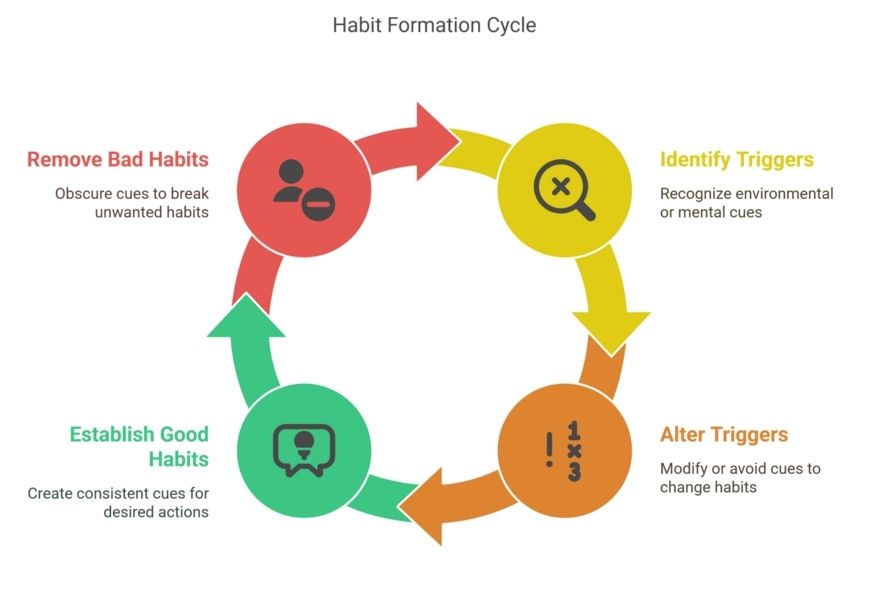
An environment that supports rhythmic behavior further enhances self-regulation. External cues such as scheduled intervals, recurring notifications, or structured environments act as anchors for desired behaviors. These cues function like metronomes, subtly guiding individuals back to their intended path without requiring constant conscious effort. The alignment of internal motivation with external structure simplifies adherence to standards, making consistency less about willpower and more about natural synchronization with the surrounding context.
Understanding the interplay between urgency and patience is critical in this framework. Cadence does not advocate for relentless acceleration or unchecked procrastination; it cultivates a steady pace that balances efficiency with sustainability. By pacing actions deliberately, individuals avoid the burnout associated with overextension while still making measurable progress. The discipline derived from cadence is resilient because it accommodates both the inevitability of interruptions and the need for recovery, embedding flexibility within a structured approach.
Feedback mechanisms within a disciplined cadence system are subtle yet powerful. When behaviors are repeated consistently, small variations become noticeable, allowing for fine-tuned adjustments. These adjustments, implemented gradually, prevent abrupt swings that can undermine progress. A system built around cadence treats each action as a data point in a larger pattern, emphasizing trends over isolated incidents. In this way, discipline is maintained not through rigid control but through a continuous process of observation, adaptation, and reinforcement.
Intrinsic motivation thrives within a cadence-oriented structure. The predictability of rhythm allows individuals to anticipate rewards and consequences in a controlled manner, fostering self-efficacy. When people experience mastery over repeated behaviors, confidence grows, and reliance on external enforcement diminishes. Cadence transforms abstract aspirations into concrete routines, bridging the gap between intention and execution. This predictability in turn reduces anxiety around decision-making, as actions are guided by established temporal frameworks rather than fluctuating moods or external pressures.
The social dimension of disciplined cadence cannot be overlooked. Communities that share synchronized patterns, whether in professional settings, educational environments, or social groups, reinforce collective adherence to standards. Shared rhythms create implicit accountability, where deviations are noticeable and adjustments are naturally prompted. This collective reinforcement strengthens individual resolve while fostering cohesion and mutual support. The cadence of group behavior magnifies personal discipline, demonstrating the compounding effect of synchronized practice.
Over time, the integration of cadence into daily life promotes not only task efficiency but also cognitive clarity. When routines are predictable, mental resources are conserved, reducing decision fatigue and emotional volatility. The brain can operate more effectively within structured parameters, freeing attention for creative problem-solving and higher-order thinking. Cadence establishes a scaffold upon which complex behaviors can be layered, enabling long-term growth without overwhelming cognitive capacities.
Discipline anchored in cadence also mitigates impulsivity. By creating natural pauses between decisions and actions, the mind gains space to evaluate options rationally. These deliberate intervals act as buffers, preventing hasty responses driven by transient emotions or external stimuli. The regularity of timing itself becomes a form of cognitive self-regulation, where the rhythm of action imposes structure on thought, gradually fostering habits of foresight and measured judgment.
The resilience of cadence-based discipline is evident in its adaptability. Even when circumstances change, the underlying rhythm can be adjusted without abandoning the principles that support consistent behavior. Flexibility is embedded in the cycle, allowing for recalibration while maintaining continuity. This ensures that discipline is not brittle or contingent upon ideal conditions; it is robust, capable of persisting through disruptions while still guiding behavior toward intended outcomes.
In essence, discipline by cadence is not about strict control or punishment; it is about harnessing the natural power of rhythm to guide actions. Repetition, timing, and structure converge to form a behavioral architecture that supports reliability, adaptability, and self-mastery. Each cycle reinforces the next, creating momentum that sustains progress even when motivation fluctuates. By respecting the interplay between regularity and flexibility, individuals cultivate a mode of operation in which disciplined behavior becomes a seamless extension of daily life, rather than a constant struggle against chaos.
As habits solidify, the cadence itself becomes a compass, orienting decisions and actions without conscious oversight. Individuals move through tasks with an intuitive sense of when to act and when to pause, guided by the internalized rhythm of prior practice. This internalized structure fosters independence, reduces reliance on external prompts, and encourages a mindful approach to goal attainment. Discipline becomes embedded in the fabric of experience, a quiet yet powerful force that shapes outcomes with consistency and grace.
Ultimately, the essence of discipline by cadence lies in recognizing that human behavior is most sustainable when it resonates with rhythm. The steady pulse of repeated, timed actions cultivates mastery, stability, and resilience. Through deliberate structuring of routines and the mindful application of repetition, individuals create environments in which responsible choices arise naturally. In this way, discipline ceases to be an external imposition and transforms into an internalized, self-sustaining flow, guiding behavior with clarity, purpose, and enduring effectiveness.



Be First to Comment